



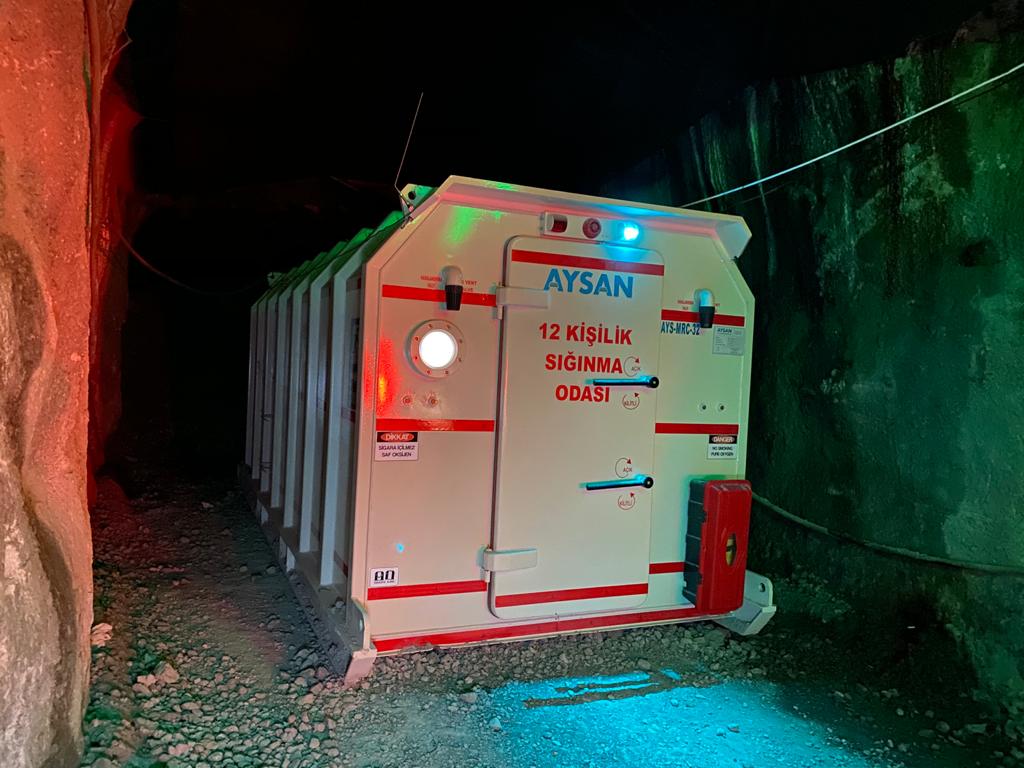
Overview of Refuge Chamber Operation
A mine refuge chamber works by creating a sealed and isolated internal environment that protects occupants from hazardous underground conditions. Once entered, the chamber operates independently from the mine’s ventilation and power systems to sustain life until rescue is completed.
Entry and Sealing Process
When an underground emergency occurs, personnel enter the refuge chamber and the access doors are sealed. This sealing process is critical, as it prevents toxic gases, smoke and heat from entering the chamber. After sealing, the chamber becomes a gas-tight and pressure-controlled environment.
Life-Support System Activation
After sealing, the life-support systems inside the refuge chamber are activated. These systems include independent oxygen supply, internal air circulation and gas management equipment. Oxygen is supplied from stored sources or generation systems, ensuring a stable and breathable atmosphere inside the chamber.
Air Quality Control Inside the Chamber
To maintain survivable conditions, the refuge chamber continuously manages internal air quality. Carbon dioxide and carbon monoxide generated by occupants are removed using dedicated scrubbing and filtration systems. At the same time, internal pressure is maintained at a level higher than the surrounding mine atmosphere to prevent gas ingress.
Environmental and Thermal Control
A mine refuge chamber is designed to protect occupants from heat, fire and external pressure. Insulated walls and fire-resistant materials help stabilize internal temperature, while the structural design ensures integrity during explosions or roof falls.
Communication and Monitoring
Most refuge chambers are equipped with communication and monitoring systems that allow occupants to stay in contact with surface rescue teams. These systems provide information on chamber status, internal conditions and occupant safety, supporting efficient rescue operations.
Sustained Occupancy Until Rescue
A mine refuge chamber is engineered for extended occupancy, typically ranging from several hours to multiple days depending on design capacity. During this period, occupants rely entirely on the chamber’s life-support systems while rescue teams work to restore access or ventilation.