



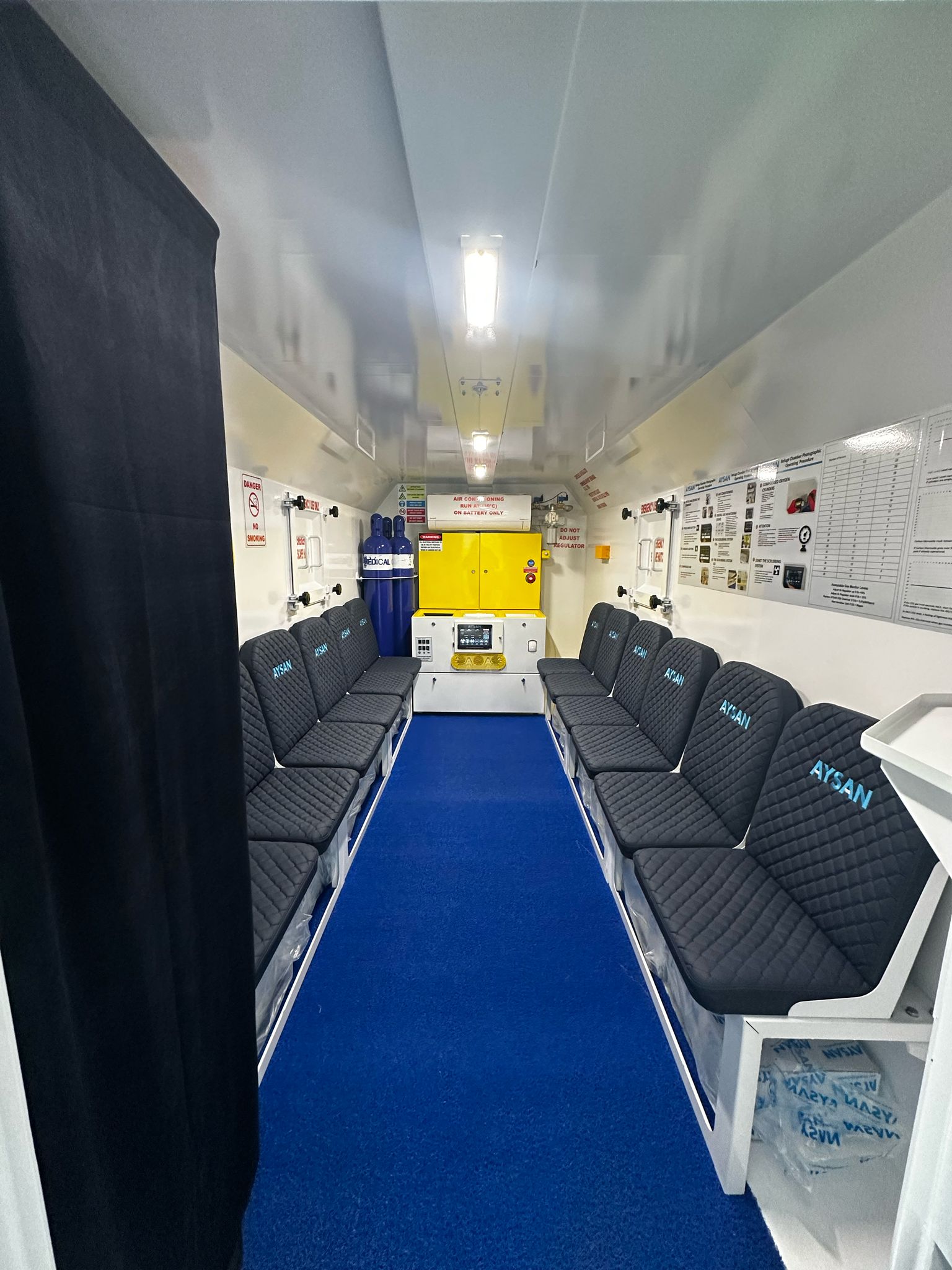
In the event of an underground mining emergency—such as a fire, toxic gas leak, or collapse—mine refuge chambers successfully isolate personnel from external threats. However, as miners spend hours inside this completely sealed and insulated steel cabin, they face another invisible and slow-progressing risk: Heat stress.
Global mine safety authorities recognize that air conditioning (AC) systems in refuge chambers are not a "comfort" feature, but a life support system as critical as the breathable air supply. So, why does a sealed chamber heat up so quickly, and what do international standards say about it?
What Are the Heat Sources in a Sealed Chamber?
According to SME (Society for Mining, Metallurgy & Exploration) technical papers and international mining guidelines, the rise in temperature inside a closed refuge chamber is a thermodynamic inevitability. There are four primary sources of internal heat generation:
- Metabolic Heat (Human Body): The human body radiates an average of 117 Watts of heat even while resting. In a fully occupied 15-person refuge chamber, the heat emitted by humans alone is equivalent to a 1.75 kW electric heater running continuously inside.
- Chemical Reaction Heat (Scrubber): It is mandatory to scrub toxic carbon dioxide (CO₂) from the air. However, the chemicals used for this process (such as soda lime) generate a significant amount of heat (exothermic reaction) when reacting with CO₂.
- Electrical Equipment: The operation of internal lighting, gas monitoring sensors, and communication devices also releases thermal energy into the environment.
- Environmental (Geothermal) Rock Temperature: If the natural rock temperature in deep mines is high, heat transfer from the outside to the inside occurs despite the insulation.
Western Australia (WA) Standards and the "Apparent Temperature" Limit
The Western Australian Department of Mines, Industry Regulation and Safety (WorkSafe WA), one of the most authoritative bodies globally in defining refuge chamber standards, emphasizes the concept of "Apparent Temperature" in its guidelines.
According to this guideline, the apparent temperature inside a refuge chamber must never exceed 35°C.
Apparent temperature is not just the dry air temperature measured by a thermometer; it is a combination of ambient temperature and relative humidity (%RH). As people breathe and sweat in a sealed room, humidity rapidly reaches 80%-100%. High humidity prevents sweat from evaporating from the skin, collapsing the body's self-cooling mechanism and leading directly to heat stress.
The Effects of Heat Stress on the Human Body
- 27°C - 32°C: Fatigue, mild sweating, and difficulty engaging in physical activity.
- 32°C - 41°C (Strong Heat Stress): Muscle cramps, dehydration, mental confusion, and an increased risk of panic attacks.
- 41°C - 54°C (Danger Zone): Heat exhaustion, severe headaches, and fainting.
- 54°C and Above: Direct heatstroke, brain damage, and life-threatening conditions.
(Note: In a fully occupied refuge chamber without active air conditioning, the apparent temperature can exceed 40°C within hours.)
Why Do AYSAN Air Conditioning Systems Make a Difference?
Fans that merely circulate air (passive ventilation) cannot reduce temperature or humidity; they only move hot and humid air around. Therefore, active air conditioning (cooling and dehumidification) is strictly required to maintain the safe limits specified in WA guidelines.
In the refuge chambers we design at AYSAN Engineering:
- Thermodynamic Calculations: We meticulously calculate the metabolic heat generated by the chamber's capacity and the exothermic values of the chemical scrubber system.
- Active Cooling: Our thermostat-controlled industrial air conditioners keep the room temperature within safe physiological tolerances (25°C - 28°C).
- Dehumidification: The system condenses and removes deadly humidity from the air, drawing relative humidity down to optimum levels, which allows personnel to balance their body temperature naturally through sweating.
- Uninterruptible Power Supply (UPS): Even if the main mine power fails, Aysan battery systems are sized to run the air conditioning units continuously for the designated stand-by duration (36 to 96 hours).
True protection in mine safety goes beyond shielding personnel from gas and fire; it means providing the optimum climate conditions that preserve their physiological and psychological integrity throughout the waiting period.